jueves, 6 de diciembre de 2012

December 12: Our Lady of Guadalupe. Majo, Nadia & Fer.


In 1531 a "Lady from Heaven" appeared to a humble Native American at Tepeyac, a hill northwest of what is now Mexico City.
She identified herself as the ever virgin Holy Mary, Mother of the True God for whom we live, of the Creator of all things, Lord of heaven and the earth.
She made a request for a church to be built on the site, and submitted her wish to the local Bishop. When the Bishop hesitated, and requested her for a sign, the Mother of God obeyed without delay or question to the Church's local Bishop, and sent her native messenger to the top of the hill in mid-December to gather an assorment of roses for the Bishop.
After complying to the Bishop's request for a sign, She also left for us an image of herself imprinted miraculously on the native's tilma, a poor quality cactus-cloth, which should have deteriorated in 20 years but shows no sign of decay 480 years later and still defies all scientific explanations of its origin.
It apparently even reflects in Her eyes what was in front of her in 1531.
Her message of love and compassion, and her universal promise of help and protection to all mankind, as well as the story of the apparitions, are described in the "Nican Mopohua", a 16th century document written in the native Nahuatl language.
There is reason to believe that at Tepeyac Mary came in her glorified body, and her actual physical hands rearranged the roses in Juan Diego’s tilma, which makes this apparition very special.
An incredible list of miracles, cures and interventions are attributed to Her. Yearly, between 18 - 20 million pilgrims visit the Basilica, making it Christianity's most visited sanctuary.
Altogether 25 popes have officially honored Our Lady of Guadalupe. His Holiness John Paul II visited her Sanctuary four times: on his first apostolic trip outside Rome as Pope in 1979, and again in 1990, 1999 and 2002.
The Feast of Our Lady of Guadalupe is celebrated on December 12th. In 1999, Pope John Paul II, in his homily from the Solemn Mass at the Basilica of Our Lady of Guadalupe, during his third visit to the sanctuary, declared the date of December the 12th as a Liturgical Holy Day for the whole continent.
During the same visit Pope John Paul II entrusted the cause of life to her loving protection, and placed under her motherly care the innocent lives of children, especially those who are in danger of not being born.

Christmas Majo, Nadia & Fer

Christmas is both a sacred religious holiday and a worldwide cultural and commercial phenomenon. For two millennia, people around the world have been observing it with traditions and practices that are both religious and secular in nature. Christians celebrate Christmas Day as the anniversary of the birth of Jesus of Nazareth, a spiritual leader whose teachings form the basis of their religion. Popular customs include exchanging gifts, decorating Christmas trees, attending church, sharing meals with family and friends and, of course, waiting for Santa Claus to arrive. December 25–Christmas Day–has been a federal holiday in the United States since 1870. http://www.history.com/topics/christmas-traditions-worldwide/videos#birth-of-a-holiday

sábado, 1 de diciembre de 2012

Mexican revolution


The Mexican Revolution (Spanish:Revolución mexicana) was a major armed struggle that started in 1910, with an uprising led by Francisco I. Madero against longtime autocrat Porfirio Díaz, and lasted for the better part of a decade until around 1920. Over time the Revolution changed from a revolt against the established order to a multi-sided civil war. This armed conflict is often categorized as the most important sociopolitical event in Mexicoand one of the greatest upheavals of the 20th century.[1]
After prolonged struggles, its representatives produced the Mexican Constitution of 1917. The Revolution is generally considered to have lasted until 1920, although the country continued to have sporadic, but comparatively minor, outbreaks of warfare well into the 1920s. The Cristero War of 1926 to 1929 was the most significant relapse into bloodshed.
The Revolution led to the creation of thePartido Nacional Revolucionario ("National Revolutionary Party") in 1929; it was renamed the Partido Revolucionario Institucional (Institutional Revolutionary Party) (PRI) in 1946. Under a variety of leaders, the PRI held power until thegeneral election of 2000.

lunes, 26 de noviembre de 2012

Thanksgiving


Prayers of thanks and special thanksgiving ceremonies are common among almost all religions after harvests and at other times. The Thanksgiving holiday's history in North America is rooted in English traditions dating from the Protestant Reformation. It also has aspects of a harvest festival, even though the harvest in New England occurs well before the late-November date on which the modern Thanksgiving holiday is celebrated.
In the English tradition, days of thanksgiving and special thanksgiving religious services became important during the English Reformation in the reign of Henry VIII and in reaction to the large number of religious holidays on the Catholic calendar. Before 1536 there were 95 Church holidays, plus 52 Sundays, when people were required to attend church and forego work and sometimes pay for expensive celebrations. The 1536 reforms reduced the number of Church holidays to 27, but some Puritans, the radical reformers of their age, wished to completely eliminate all Church holidays, including Christmas and Easter. The holidays were to be replaced by specially called Days of Fasting or Days of Thanksgiving, in response to events that the Puritans viewed as acts of special providence. Unexpected disasters or threats of judgement from on high called for Days of Fasting. Special blessings, viewed as coming from God, called for Days of Thanksgiving. For example, Days of Fasting were called on account of drought in 1611, floods in 1613, and plagues in 1604 and 1622. Days of Thanksgiving were called following the victory over the Spanish Armada in 1588 and following the deliverance of Queen Anne in 1705. An unusual annual Day of Thanksgiving began in 1606 following the failure of the Gunpowder Plot in 1605 and developed into Guy Fawkes Day.

elections day


The United States presidential election of 2012 was the 57th quadrannal presidential election and took place on Tuesday, November 6, 2012. The Democratic nominee, President Barack Obama, and his running mate, Vice President Joe Biden, were elected to a second term. Their major challengers were the Republican nominee and former Massachusetts Governor Mitt Romney and his running mate, Representative Paul Ryan of Wisconsin.
Four major debates were held during the last weeks of the campaign: three presidential and one vice-presidential. Issues debated included the economy and jobs, the national deficit, social policy, immigration and foreign policy. Although most major media outlets insisted the election was too close to predict a winner in advance, analysts using statistical models, bookmakers and betting markets had Obama as a clear favorite to win.
On November 6, by around 11:15 PM EST, most major television networks projected the winners would be Obama and Biden. At about 1:00 AM EST (6:00 AM GMT) on November 7, Romney conceded the election to Obama, just as the polls in Alaska were closing. As of November 10, the electoral outcomes of all 50 states and the District of Columbia had been definitively projected, with final vote counts still outstanding in some states. Obama carried all the states and districts (among states that allocate electoral votes by district) he had won in the 2008 election except North Carolina, Indiana and Nebraska's 2nd congressional district.

domingo, 25 de noviembre de 2012

Thanksgiving part 2

2nd Monday in October (Canada)
1st Thursday in November (Liberia)
Last Wednesday in November (Norfolk Island)
4th Thursday in November (USA)
2012 date
October 8, 2012 (Canada);
November 1, 2012 (Liberia);
November 28, 2012 (Norfolk Island);
November 22, 2012 (USA)
2013 date
October 14, 2013 (Canada);
November 7, 2013 (Liberia);
November 27, 2013 (Norfolk Island);
November 28, 2013 (USA, Puerto Rico)

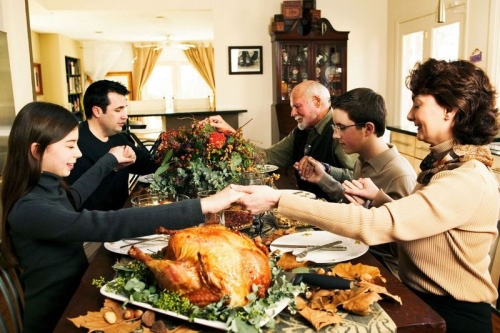
Thanksgiving Day is a national holiday celebrated primarily in the United Statesand Canada. Several other places around the world observe similar celebrations. It is celebrated on the fourth Thursday of November in the United States and on the second Monday of October in Canada. Thanksgiving has its historical roots in religious traditions, but today is celebrated in a more secular manner.

Thanksgiving.(Majo,Fer&Nadia)


Thanksgiving is a day when many Americans gather together with family for an afternoon of food and football, but just how far do people travel to spend turkey day at Grandma's house? Which state grows the most cranberries, and how big was the world's largest pumpkin pie? Discover the answer to these questions, as well as many more facts about popular Thanksgiving foods and traditions.